Materials, your time and the overhead nobody counts — turned into one number you can price against.
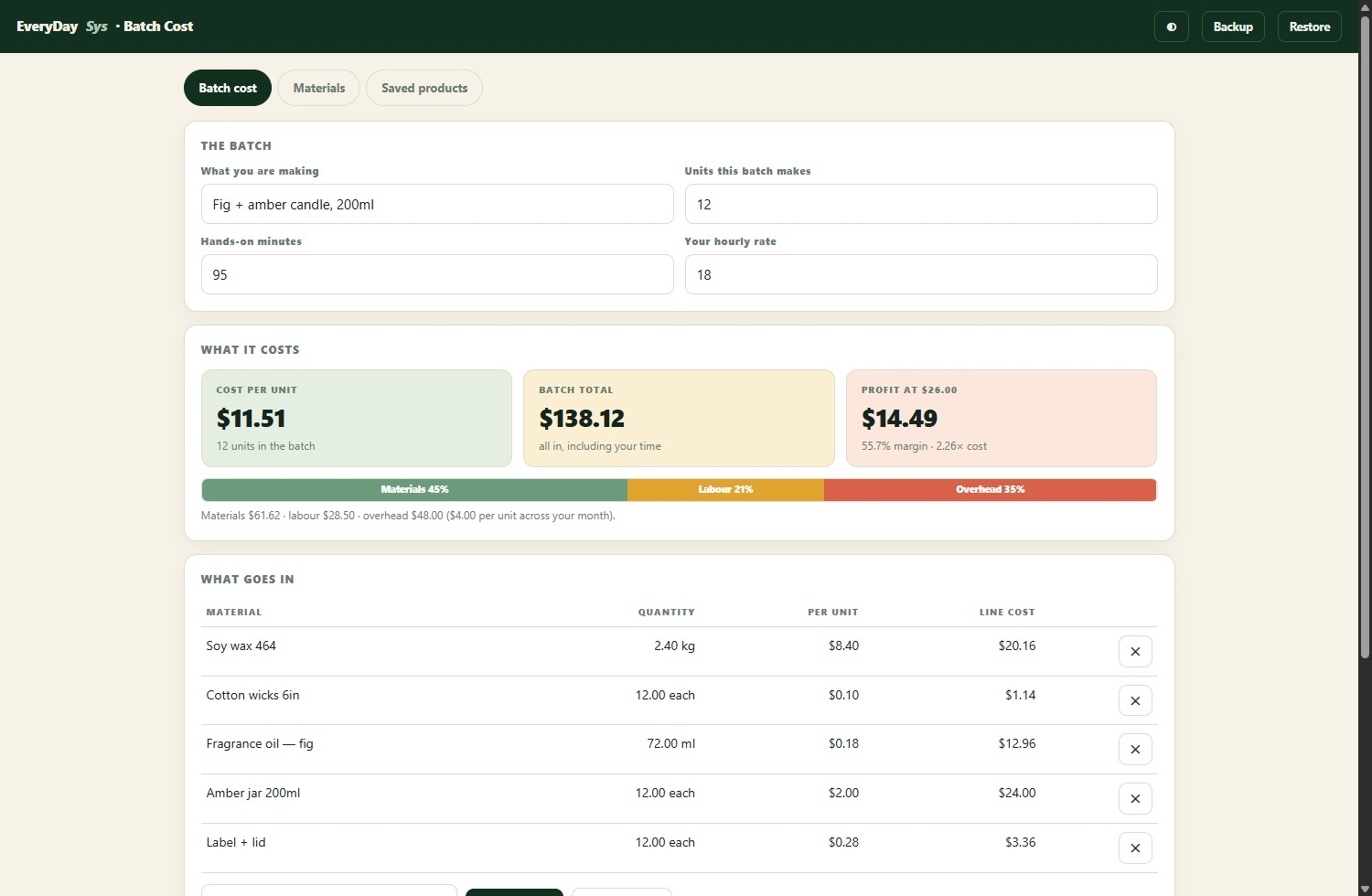
Wax went up, the jars went up, and the price stayed where it was in January. Materials are easy to count and easy to get wrong; the three hours and the studio rent are worse, because they never appear on a receipt.
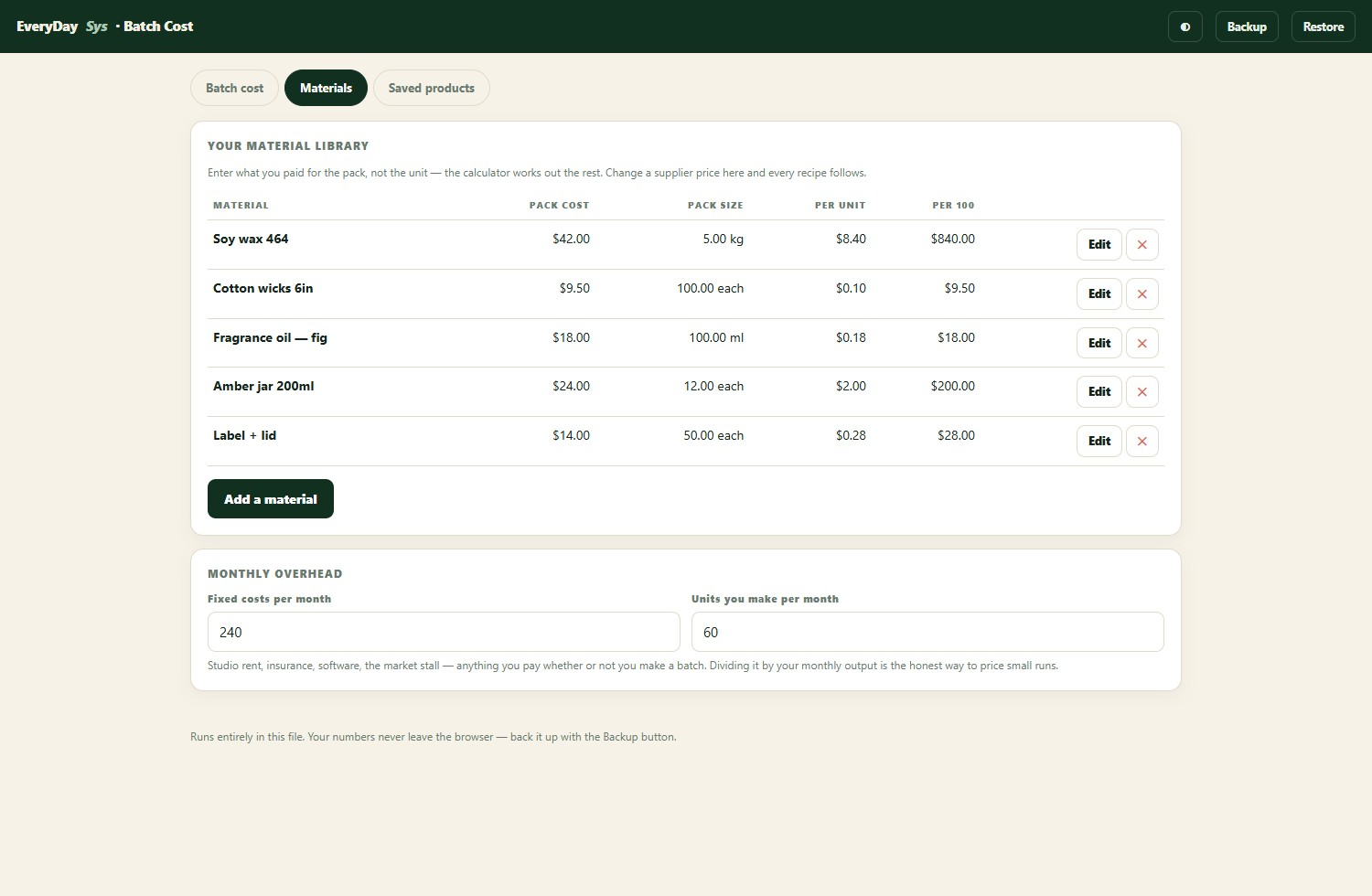
Pack price and pack size. The calculator works out cost per gram, per ml, per unit.
Pick the materials, type the quantities, set how many units the batch makes.
See cost per unit, the margin at your retail price, and the price a 60% margin needs.
A batch of 12 hiding one expensive ingredient is a different business from a batch of 12 that is all wax.
Hands-on minutes × your hourly rate, carried into the cost. If it is not in the price you are working for free.
Studio rent, insurance, the market stall. Monthly cost ÷ units made = what each unit owes.
One number in the material library updates every recipe that uses it.
Keep the batches that work, sorted by margin, and stop guessing which one pays.
One page for the batch: materials, labour, overhead, per-unit cost and the price maths.
Not ready to buy? There is a free batch cost calculator that does the same arithmetic in the browser and saves nothing — no signup, no download.
No, but the number is honest without it only if you are happy working for nothing. Most makers set it at what they would charge a stranger.
Use the same unit for pack size and quantity — ounces, grams, ml, each. The maths does not care which.
Yes. Save each batch under Saved products and compare the margins side by side.
Yes, one page per batch — useful when you are deciding whether a wholesale order is worth taking.
Materials, your time and the overhead nobody counts — turned into one number you can price against.
Buy now on Etsy → EveryDaySys